
What Is a Type Set? The Most Flexible Way to Collect U.S. Coins
A type set is a collection built around coin designs rather than dates. Instead of collecting every year and mintmark of the Lincoln cent (which would require, among other things, the expensive 1909-S VDB), a type collector acquires one example of each major Lincoln cent design — Wheat reverse, Memorial reverse, Bicentennial, Union Shield. The approach opens all of American numismatic history to collectors without demanding rare key dates, and it is one of the most elegant and flexible strategies in the hobby.
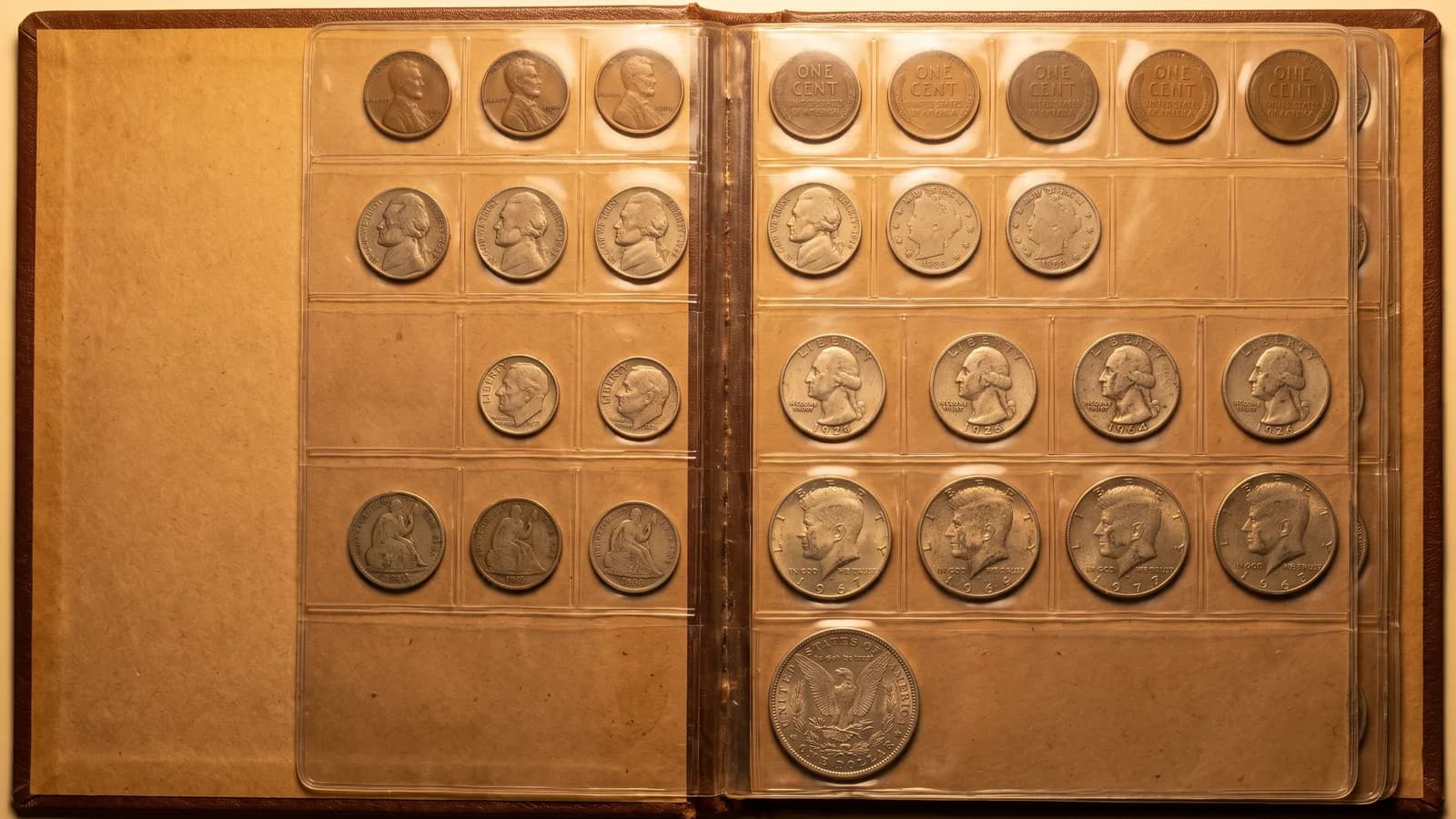
Key takeaways
- A type set collects one example of each major design type rather than every date and mintmark combination.
- Type sets are ideal for collectors who want broad historical coverage without pursuing expensive key dates.
- Popular type sets include the 20th-century type set, the complete U.S. silver type set, and the complete U.S. gold type set.
- A modest circulated 20th-century type set can be assembled for $300–$800 depending on grades selected.
- Type sets allow collectors to acquire one beautiful coin per design — prioritizing quality over quantity.
What Makes a "Type"?
A type is a major design change on a coin — a new portrait, a new reverse design, or a fundamental modification to the existing design. On the Lincoln cent, the 1909–1958 Wheat reverse and the 1959–2008 Memorial reverse are two different types. Adding the Lincoln Bicentennial reverses (2009) and the Union Shield (2010–present) creates additional types.
Smaller changes — like adding "IN GOD WE TRUST" to a coin in 1866 or changing the weight — can also define sub-types. The level of granularity is up to the collector. A detailed type set of U.S. coinage includes over 100 types; a simpler 20th-century set covers about 30–40.
The 20th-Century Type Set: A Popular Starting Point
A 20th-century U.S. type set collects one example of each coin design used for circulation in the 1900s. Major types include: Lincoln Wheat cent, Lincoln Memorial cent, Buffalo nickel, Jefferson nickel (wartime silver and regular), Mercury dime, Roosevelt dime, Barber quarter, Standing Liberty quarter, Washington quarter, Barber half dollar, Walking Liberty half dollar, Franklin half dollar, Kennedy half dollar, Morgan dollar, Peace dollar, Eisenhower dollar, Susan B. Anthony dollar, Sacagawea dollar, and Presidential dollar.
Many of these are achievable in circulated grades for just a few dollars each — the Morgan dollar and Peace dollar in circulated grades are typically the most expensive pieces. A complete circulated 20th-century type set can cost $300–$800 depending on which coins you include and their grades.
Complete U.S. Type Sets: The Advanced Version
A complete U.S. type set reaching back to 1793 encompasses all coin designs from the Flowing Hair cent through modern issues. This is a serious, multi-year project requiring meaningful budget — the early copper and silver types (Flowing Hair, Draped Bust, Capped Bust) start at several hundred dollars each in any circulated grade, and some types exist only in proof.
The complete type set is considered one of the highest achievements in American numismatics. Louis Eliasberg built the complete date set; many advanced collectors choose the type set as a more achievable but equally satisfying goal. The American Numismatic Association's ANA has resources for type collectors at every level.
U.S. Silver and Gold Type Sets
A U.S. silver type set collects one of every major silver coin design — from the Flowing Hair dollar of 1794–1795 through the Kennedy half dollar, Eisenhower dollar, and Silver Eagles. All silver types use 90% silver (pre-1965) or 99.9% silver (Silver Eagle). A circulated silver type set in Fine-to-VF grades costs roughly $1,000–$3,000, depending on which rare early types you include.
A U.S. gold type set collects one of every pre-1933 gold coin design — $1, $2.50, $3, $5, $10, and $20 pieces across all major design types. This is more expensive due to gold prices, but most gold type coins can be found in common circulated grades for modest numismatic premiums above melt. See our pre-1933 gold coins guide for gold content by denomination.
Building Your Type Set: Practical Tips
Start by defining your scope — 20th century, all U.S. silver, all U.S. coinage, or a specific denomination across all types. Make a checklist before buying. Prioritize quality within each type over number of types: one beautiful VF Seated Liberty quarter is better than a problem-filled Good. Read coin grading explained before deciding on target grades.
Buy types you love first. If a specific design captivates you, start there and work outward. Coin shows are excellent venues for type collecting — you can compare many different types and grades side by side from multiple dealers in a single afternoon. Set a per-coin budget and stick to it.
Frequently asked questions
Do I need to collect every date to have a type set?+
No. A type set requires only one example per design type — any date within that type's run qualifies. This lets you skip expensive key dates and choose the most common, attractive, or affordable date within each type.
What is the most popular type set among beginners?+
The 20th-century U.S. type set is the most popular starting point — it covers familiar coins from Lincoln cents through Presidential dollars, is achievable in circulated grades for $300–$800, and tells the complete story of modern American coinage.
Can I mix certified and raw coins in a type set?+
Yes. Many collectors keep raw coins for affordable common types and buy certified (PCGS/NGC) coins for more expensive types where authenticity and grade certainty matter. There is no rule requiring uniformity.
Is a type set a good way to preserve value?+
Type sets of quality coins in nice original condition tend to be stable stores of value compared to raw common coins. The key is condition — well-preserved, problem-free examples retain their numismatic premium best over time.
Where do I find coins for a type set?+
Coin shows are ideal — you can handle many types in person and compare dealers. Local coin shops are also excellent. For expensive types, buy certified from PCGS or NGC. See our [coin shows guide](/guides/coin-shows-guide) for how to use a coin show effectively.