
Hard Times Tokens: A Complete Collector's Guide
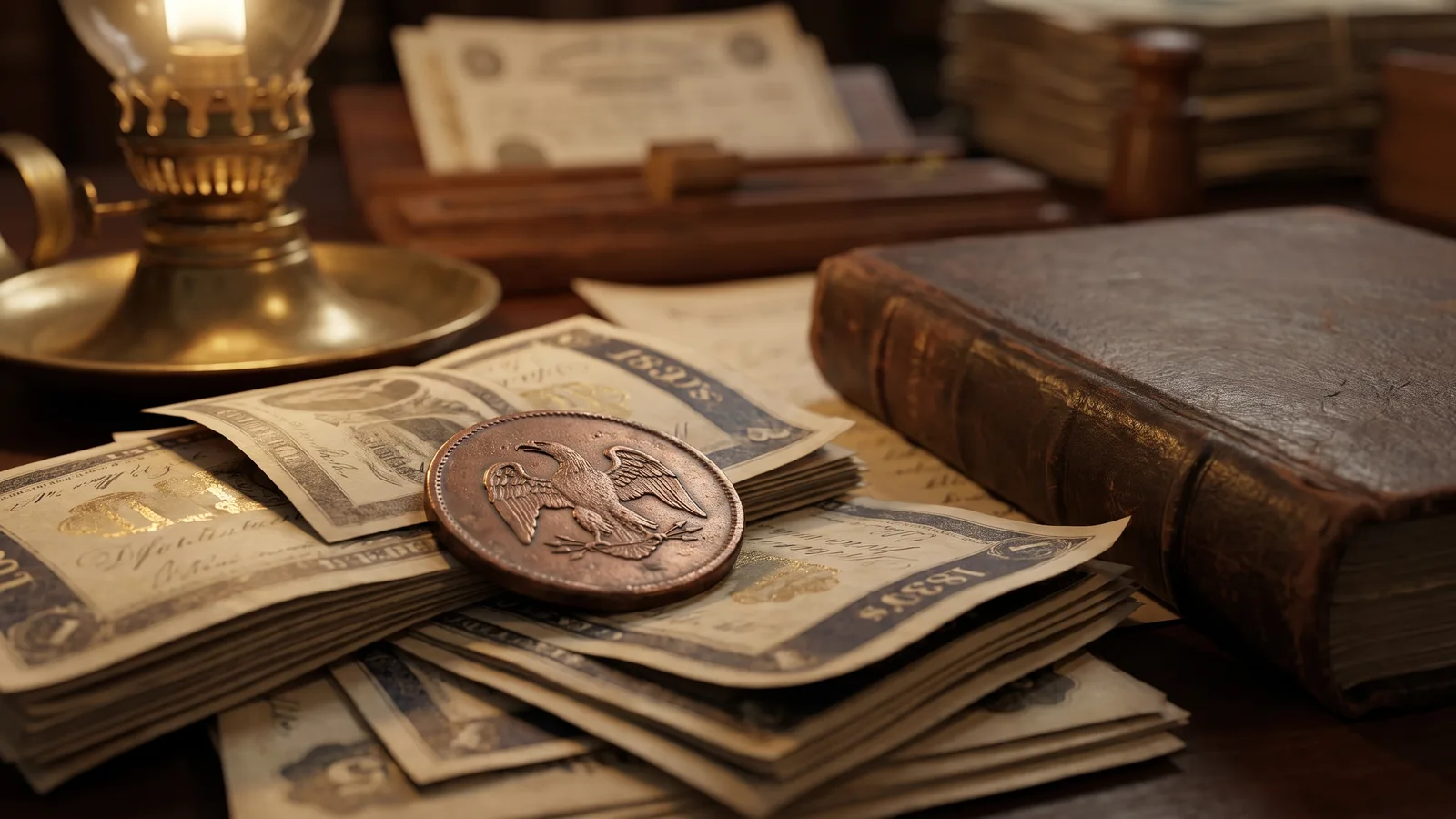
Hard Times tokens are privately made copper pieces, most about the size of the U.S. large cent of the day (roughly 28-29mm), that circulated as an unofficial one-cent substitute in the United States from about 1832 through 1844. They were never official legal tender; they passed at one cent because the public accepted them. Born from Andrew Jackson's Bank War and the economic crisis known as the Panic of 1837, hard times tokens carry some of the most pointed political satire in American numismatics alongside plain merchant advertising. This guide explains what they are, why they appeared, how they are cataloged and valued, and how to start collecting them.
Key takeaways
- Hard Times tokens are privately made copper pieces, most about the size of the contemporary U.S. large cent (roughly 28-29mm), struck from about 1832 to 1844 and passed at one cent by public acceptance, never as legal tender.
- They split into two families: political and satirical tokens that attack Andrew Jackson, Martin Van Buren, and the Bank, and merchant store cards that advertise a private business by name and city.
- The series is cataloged by Lyman Low numbers (L-#) and by Russell Rulau's later HT numbers (HT-#), which are now the standard reference.
- Common circulated examples commonly run about $20 to $60, while genuine rarities such as the abolitionist tokens can reach five figures at auction.
- The idea returned two decades later as Civil War tokens (1861 to 1864), which are smaller because they imitated the smaller federal cent of their own era.
What Is a Hard Times Token?
A Hard Times token is a privately struck copper piece, most about the size of the contemporary large cent (roughly 28-29mm, with a few in a half-cent size), that circulated as a one-cent substitute during America's Hard Times economic era. It was never legal tender. It passed at a cent only because merchants and the public agreed to accept it.
The name comes from the period itself, the hard times that followed the financial Panic of 1837. Button makers, medal engravers, and die sinkers who already had the equipment to strike small metal discs filled the gap left by scarce federal coinage, and they used the surface as space for both political messages and business advertising.
Because they are copper and cent-sized, worn Hard Times tokens are sometimes mistaken for genuine large cents. Learning to tell them apart is a core collecting skill covered in our guide on how to identify Hard Times tokens.
When and Where Were They Made?
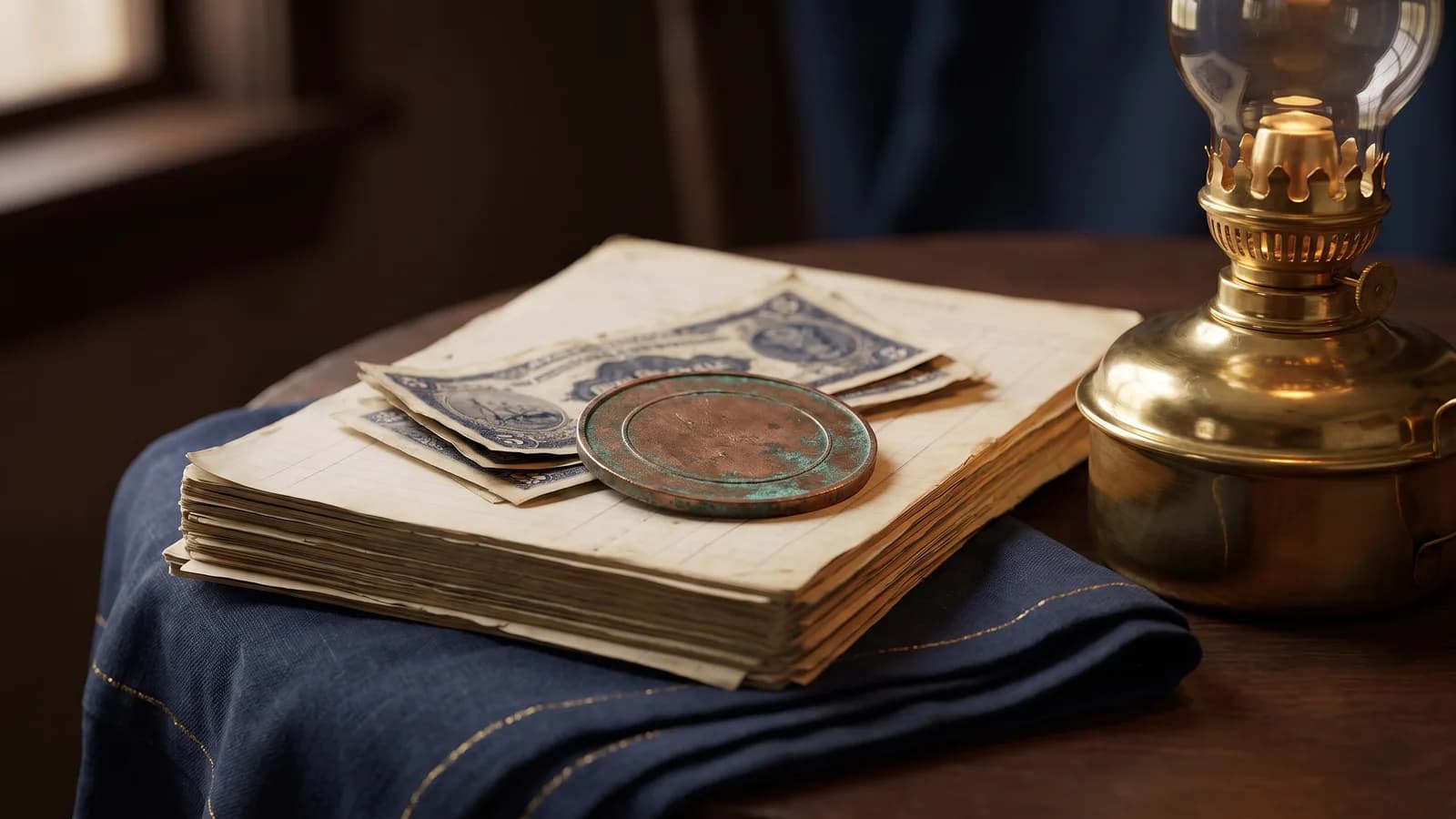
Hard Times tokens were struck from about 1832 or 1833 through about 1843 or 1844, mostly in the northeastern United States, with New York City, Boston, and other commercial cities as major centers of production.
The dating is a range rather than a hard line because the tokens were private products, not federal issues with fixed authorizing dates. The political pieces cluster around the peak of the currency debates in the mid-to-late 1830s, while merchant store cards appear across the whole span.
The typical piece is copper, though a small number were struck in brass or other metals. The large-cent size was deliberate, so the token would sit comfortably in commerce next to the real cent it stood in for.
Why Did Hard Times Tokens Appear?
Hard Times tokens appeared because of a collision of politics and economics in the 1830s. As banks failed and people hoarded gold and silver, small change vanished from circulation, and private tokens rushed in to fill the void while also carrying loud opinions about who was to blame.
The political spark was President Andrew Jackson's Bank War. Jackson vetoed the recharter of the Second Bank of the United States in July 1832 and ordered federal deposits removed from it in 1833. You can read more about that fight at The Hermitage, Jackson's historic home and museum, and in our focused guide on Andrew Jackson Hard Times tokens.
The economic trigger followed. The Specie Circular, issued July 11, 1836, required gold or silver for the purchase of public land, which strained the banking system. The Panic of 1837 struck under President Martin Van Buren, banks suspended payment in coin, and hard money disappeared into hiding. With no easy small change, tokens the size of a cent became a practical everyday substitute.
What Are the Main Types of Hard Times Tokens?
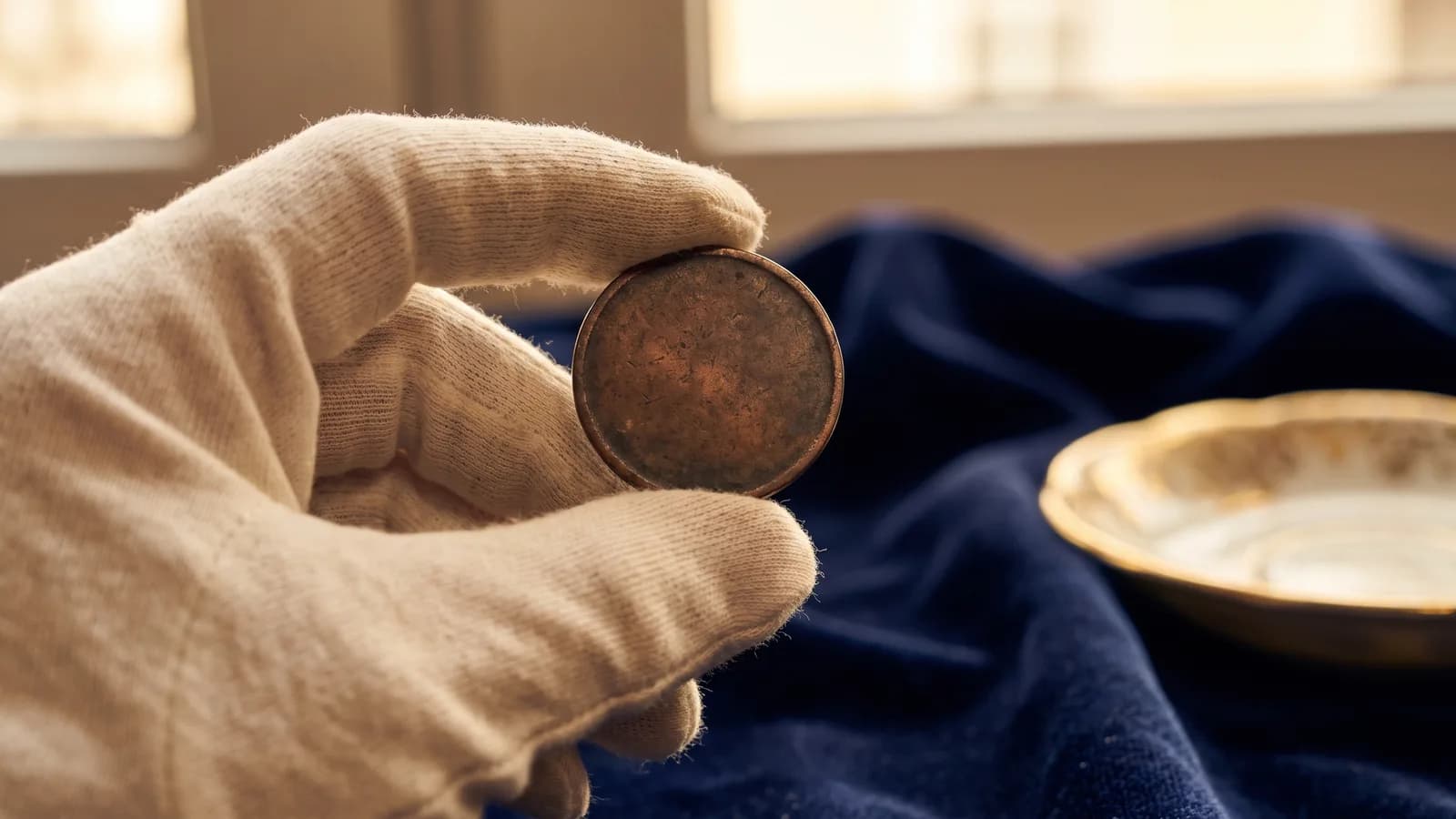
Hard Times tokens divide into two main families plus a category of oddities. Political and satirical tokens attack or mock the era's leaders and monetary policy, while merchant store cards advertise a private business. Mules are pieces that pair an obverse and reverse die never meant to be used together.
Political tokens often imitate the design of the large cent, showing a Liberty head but reading NOT ONE CENT or carrying a slogan. That word NOT was a legal hedge, letting the maker sidestep laws against imitating federal coinage while still looking familiar in a handful of change.
Merchant store cards, also called tradesman's cards, name a real business, its trade, and its city. They are the direct ancestors of the Civil War store cards that appeared a generation later, and they are covered in depth in our guide to Hard Times token store cards.
The table below summarizes how the families differ. Rarity and value overlap heavily between them, so treat the price notes as broad orientation, not fixed rules.
| Type | What it shows | Typical purpose | Notes |
|---|---|---|---|
| Political / satirical | Liberty head or cartoon; slogans like NOT ONE CENT | Political protest and commentary | Often imitates the large cent |
| Merchant store card | Business name, trade, and city | Advertising a private business | Ancestor of Civil War store cards |
| Mule | Mismatched obverse and reverse dies | Usually unintended pairing | Can be scarce and collectible |
Which Political Designs Are Famous, and What Do They Mean?
The political Hard Times tokens are famous for turning a coin-sized surface into pointed satire of Jackson, Van Buren, and the Bank War. A handful of designs come up again and again in collections and catalogs.
The I TAKE THE RESPONSIBILITY token shows Jackson rising from a strongbox or trunk clutching a sword and a money bag, mocking his claim of personal responsibility for removing the federal deposits. It is often paired with a running jackass, or donkey, on the reverse, sometimes with legends such as THE CONSTITUTION AS I UNDERSTAND IT or ROMAN FIRMNESS and VETO.
Another design shows a tortoise carrying a strongbox marked SUB TREASURY under the legend EXECUTIVE EXPERIMENT and FISCAL AGENT, ridiculing Van Buren's Independent Treasury plan as slow. Ship designs contrast a full-sailed vessel reading WEBSTER CREDIT CURRENT, a pro-credit Whig message, with a foundering ship reading VAN BUREN METALLIC CURRENCY that mocks the hard-money position.
A phoenix rising from flames carries SPECIE PAYMENTS SUSPENDED and the date May 10, 1837, marking the day banks stopped paying out coin. Others revive patriotic slogans such as MILLIONS FOR DEFENCE NOT ONE CENT FOR TRIBUTE on Liberty-head cent imitations. For a fuller catalog of legends and imagery, see our guide to Hard Times token designs and slogans.
What Are the Abolitionist Hard Times Tokens?
The abolitionist Hard Times tokens are among the most historically important and valuable in the series. The best known reads AM I NOT A WOMAN AND A SISTER, dated 1838, and shows a kneeling enslaved woman in chains, an image adapted from the Wedgwood antislavery medallion of the 1780s.
A rarer companion piece reads AM I NOT A MAN AND A BROTHER, showing a kneeling man. These tokens carried a moral argument into everyday pockets at a time when the antislavery movement was building, and they remain in strong demand today.
Values reflect that demand and rarity. A Man and a Brother example sold for about $70,500 at a Heritage auction, and the woman and sister design is a keystone of many collections. Both are examined in detail in our dedicated guide to the Am I Not a Woman and a Sister token.
How Are Hard Times Tokens Cataloged?
Hard Times tokens are cataloged by two numbering systems, and serious buyers cite both. Lyman H. Low first organized the series, and his 1899 edition listed 183 types, which is why pieces are still referred to by Low numbers written as L followed by a number.
Russell Rulau later expanded the reference far beyond Low's original list and assigned HT numbers, written as HT followed by a number. Rulau's numbering is now the standard, and many listings quote both the L-number and the HT-number so collectors can cross-reference older and newer sources.
Rarity is expressed on standard numismatic rarity scales rather than exact surviving counts, so a listing will describe a piece as common, scarce, or rare rather than giving a precise population. When you see an attribution like L-plus-number and HT-plus-number together, that is the token's identity, and it is the first thing to confirm before judging value. The American Numismatic Association and its resources are a good place to learn the reference framework.
What Are Hard Times Tokens Worth?
Most Hard Times tokens are affordable, with genuine rarities reaching into the thousands. Common merchant store cards and political tokens in Fine to Very Fine condition commonly run about $20 to $60, which puts a real 1830s piece of history within reach of a beginning collector.
Nicer common types in About Uncirculated to Uncirculated grades commonly run about $75 to $250, and stronger surfaces or better copper color can push them higher. Scarcer political satires and less-common merchants run into the hundreds, and genuine rarities with few known examples, popular designs, or abolitionist subjects reach the thousands, up to five figures for the most famous.
These are broad ranges, not quotes. Actual prices move with the market, the specific variety, and eye appeal. For a deeper breakdown by grade and type, see our guides on Hard Times token values and the most valuable Hard Times tokens, and read our overview of how coin prices are determined.
A Worked Example: How Design, Rarity, and Grade Set a Price
Value comes from three levers working together: how desirable the design is, how rare the variety is, and what grade and color the individual piece shows. Walking one token through those levers makes the pricing logic concrete.
Imagine two copper Hard Times tokens. The first is a common merchant store card, plentiful in the market, worn to Very Fine with even brown surfaces. Desirability is modest, rarity is low, and the grade is mid-range, so it lands near the bottom of the range, perhaps around $20 to $60.
The second is a well-known political satire in a scarcer variety, sharply struck and near Uncirculated with attractive original color. Here all three levers pull upward: strong collector demand for the design, genuine scarcity, and a high grade with good copper color. That combination can move the same broad category into the hundreds or more. The lesson is that no single factor sets the price; you weigh design, rarity, and grade together, and copper color often breaks the tie.
How Are Hard Times Tokens Graded?
Hard Times tokens are graded like other copper coins, using wear-based grades combined with a color designation, because copper color has a large effect on value. The three standard color codes are Brown (BN), Red-Brown (RB), and Red (RD), running from fully toned to nearly original mint color.
Wear grades follow the usual scale from well-circulated (Good, Fine, Very Fine) up through About Uncirculated and Mint State. On top of that, surface quality matters: corrosion, cleaning, scratches, and porosity all pull value down even when the design detail is strong. Original, uncleaned surfaces are prized.
Third-party grading from services such as PCGS and NGC can confirm authenticity, grade, and attribution, which matters more as value rises. To understand the scale itself, see our primer on coin grading explained and our comparison of coin grading companies.
How Do Hard Times Tokens Compare to Civil War Tokens?
Hard Times tokens and Civil War tokens are cousins born from the same idea, a private cent substitute struck when federal coins went into hiding, but they belong to different decades and different sizes. The clearest physical tell is diameter.
Hard Times tokens are large-cent sized, roughly 28-29mm, because they imitated the big federal cent of the 1830s. Civil War tokens, struck from 1861 to 1864, are small-cent sized at roughly 19mm, because by then the federal cent had shrunk. Put the two side by side and the size gap is obvious.
Both include political and merchant types, and both were driven by coin shortages, but they are cataloged and collected as separate series. For a full comparison, see our guide on Civil War tokens versus Hard Times tokens and the broader Civil War tokens guide.
| Feature | Hard Times tokens | Civil War tokens |
|---|---|---|
| Era | About 1832 to 1844 | 1861 to 1864 |
| Approx. diameter | Large-cent size (~28-29mm) | Small-cent size (~19mm) |
| Trigger | Bank War and Panic of 1837 | Civil War coin shortage |
| Main types | Political and store cards | Patriotics and store cards |
How Did the Hard Times Token Era End?
The Hard Times token era ended as the economy recovered in the early-to-mid 1840s and federal small change became available again. Once real cents were easy to get, merchants no longer needed a stand-in, and token production stopped around 1844.
The tokens did not vanish from history, though. Many stayed in circulation for years, worn smooth alongside genuine coins, which is one reason so many survive in low grades today.
The concept resurfaced two decades later. When the Civil War drove coins out of circulation again in the early 1860s, private makers revived the same solution, producing the Civil War tokens that collectors pair with Hard Times pieces as two chapters of one story.
How and Where Do You Start Collecting?
The easiest way to start is to buy one affordable, correctly attributed common piece and learn from it before spending more. A common merchant store card or political token in Fine to Very Fine puts a genuine 1830s token in hand for a modest sum, and it teaches you what real copper of the era looks and feels like.
Decide on a focus early. Some collectors chase political satires, others assemble merchant store cards by city, and others target a short set of famous designs. Whatever the path, confirm the Low and Rulau attribution, check for cleaning and corrosion, and favor original surfaces. Our guide on how to collect Hard Times tokens walks through building a set, and how to store coins covers protecting copper long term.
Buy from knowledgeable specialists. You can browse the medals and tokens directory to find dealers who handle exonumia, locate a nearby shop through our coin shops directory, and consult rare coin dealers for scarcer material. Coin shows are another strong option, covered in our coin shows guide.
Frequently asked questions
Are Hard Times tokens legal to own and sell?+
Yes. They were privately made and never legal tender, passing at one cent only by public acceptance. Owning, buying, selling, and collecting them is completely legal today.
How can I tell a Hard Times token from a real large cent?+
They are close in size, but Hard Times tokens carry private legends such as NOT ONE CENT, a merchant's name and city, or political imagery rather than the standard federal design. See our guide on how to identify Hard Times tokens.
What do L and HT numbers mean?+
L numbers come from Lyman Low's early catalog of the series, and HT numbers come from Russell Rulau's later, expanded reference. Rulau's HT numbering is now standard, and listings often cite both.
Why are Hard Times tokens larger than Civil War tokens?+
Each imitated the federal cent of its own era. Hard Times tokens match the 1830s large cent at roughly 28-29mm, while Civil War tokens match the smaller 1860s cent at roughly 19mm.
What is the most valuable Hard Times token?+
The famous rarities, especially the abolitionist pieces, command the highest prices. An Am I Not a Man and a Brother example sold for about $70,500 at a Heritage auction, while common pieces run in the tens of dollars.
How much do common Hard Times tokens cost?+
Common merchant store cards and political tokens in Fine to Very Fine condition commonly run about $20 to $60, making the series an affordable entry point into 1830s history.